
Last week we held the second general assembly for LoGaCulture. I can’t believe its been a year since the project started, and we had much to report, and even more to plan for! We also had a lot to live up to after last years’ amazing start in Madeira, and as the UK hosts we felt that a Travel Lodge in Southampton probably wouldn’t cut it, so we booked the New Forest Lodge in Lyndhurst and welcomed the LoGaCulture team to the National Park and its resident wild horses. We also arranged a day trip up to Avebury. The weather gods were kind, and two weeks of drizzle and wind gave way to a cold but sunny morning on the chalk (the header image is from our walk to the top of Waden Hill where you get a fantastic view across the Vale of Pewsey, including Silbury Hill – the largest human made prehistoric earth work in Europe).
Ghosts of LoGa Past
The first day was a symposium on the work done so far across the project, this has mainly been research into the case study locations, the goals of our cultural partners, and the state of the art in the four research themes across the project:
Authoring – Charlie Hargood presented the work that he and the Bournemouth and Southampton teams have been doing on developing an authoring infrastructure. Jack Brett has developed a Unity extension that takes some of the principles of sculptural hypertext (storylets!) from the StoryPlaces project and extends them to a wider set of mechanics for mixed reality games in general. Conceptually it expands storylets to contain their own presentational and behavioural elements – which in the Unity environment makes them extremely powerful. Charlie has commissioned ten game designers to test the framework over the next year, and we are using it for our own system in Avebury.
Transmedia and Social Visiting – Valentina Nisi presented the work we have done on developing probes for both Avebury and the Levadas in Madeira in order to understand the existing visiting experience. There are two sets: postcards exploring people’s relationship with the sites, and sensory maps exploring the immediate experience of visiting. Our initial analysis of these probes has been key in setting out our goals for the next design phase, and are revelatory compared to a more standard visitor analysis using questionnaires or interviews.
Narrative Conventions and Mechanics – Mads Haahr presented the work they have done deconstructing existing mixed reality experiences to understand the approaches taken to storytelling, and the typical game mechanics, as well as looking at how these have been mapped to cultural heritage goals. Mads’ work reveals the existing toolbox of ideas that we can draw from for our own case studies, but also shows the limitations of current implementations – hopefully we can go further!
Immersion and Presence – finally, Uli Spierling introduced the work that we have completed on understanding what immersion and presence mean for mixed reality, especially at cultural heritage sites. Typically when researchers talk about immersion in extended reality systems they are talking about sensory immersion in a non-real world – typically driven by graphics and audio. Uli pointed out that this should not be the goal in culytural heritage sites, but instead we are interested in other types of immersion: cultural, historical, social – and perhaps critically the aim is to enhance and extend the existing spirit of place rather than conjuring something new.
Ghosts of LoGa Future
We also spent some time looking at the big hill ahead, not Silbury but rather the design and implementation of the mixed reality games for our four case study sites.
Avebury and Madeira look to be taking a similar transmedia approach, with a physical experience in the museum/visitor centre linked to the digital game that is played on site. For Maderia this is likely to be a series of routes following the Levadas, whereas in Avebury we are looking at a layered experience with each layer expanding the geographic area (from visitor centre -> henge -> landscape walk -> far flung POIs.
In Ireland they have the challenge of conjuring the past in an area that is evocative but very light on visible markers. The Battle of the Boyne site in particular bears no marks to show the significance of what has gone before. The Irish team also face the challenge that it is a sensitive site, with alternative perspectives on the story of the battle and its significance.
In Germany the Senckenberg is a very different site from the others. Both in terms of overall scale, and the fact that it is indoors. The team are looking at an Augmented Reality experience (powered by Hololens) and considering ways in which elements of the exhibits in the museum (for example, their skeletons) might be linked to the same elements in visitors.
All four sites are in a position to draw on the findings from our first year. In Avebury I am particularly keen to explore the navigational structures and social visiting ideas that we have been discussing. In all four sites we now begin to design in earnest, with the aim that we have testable games by next April with public launches in the Summer of 2025.
Ethics GameJam
The second day was more of a workshop where we developed some of the ideas and set up some things for the future. My favourite part was the Mixed Reality Ethics GameJam that we ran in the morning.
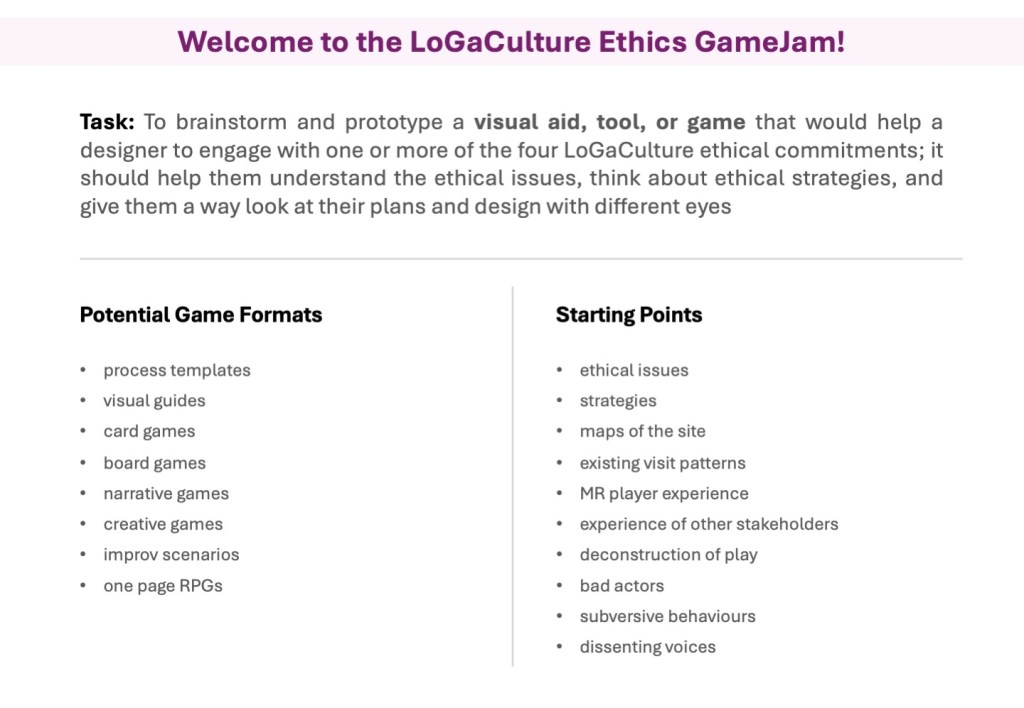
A great way to both engage with the ethical analysis work we have already undertaken, as well as a starting point to developing potential tools for designers in the future.


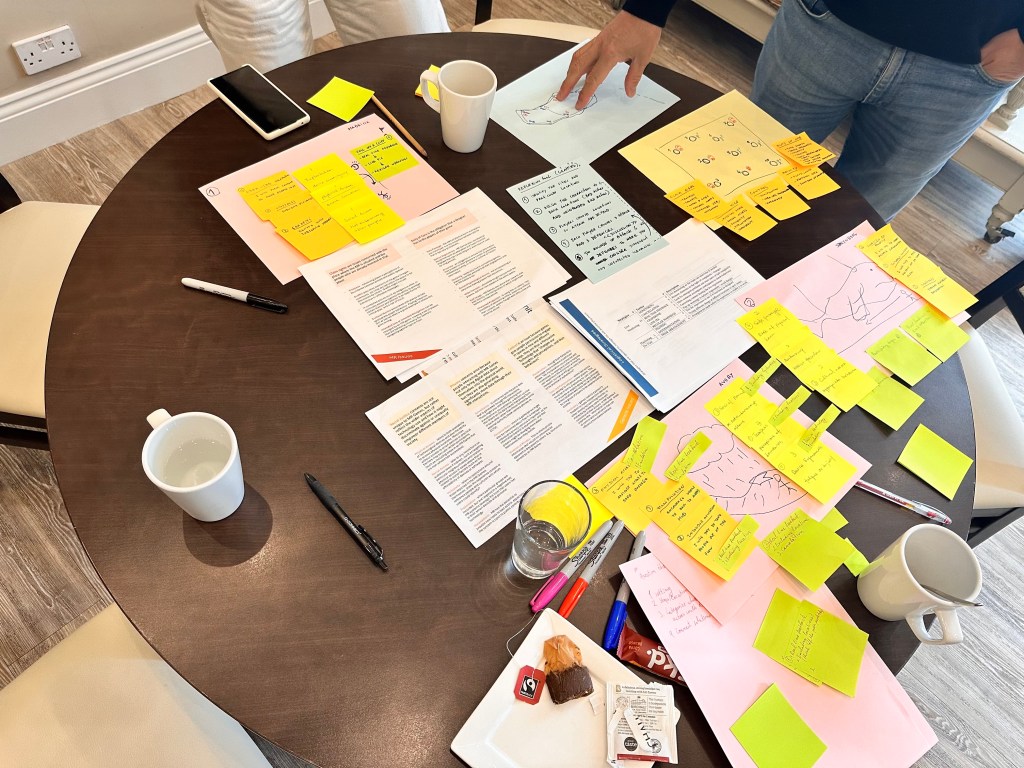
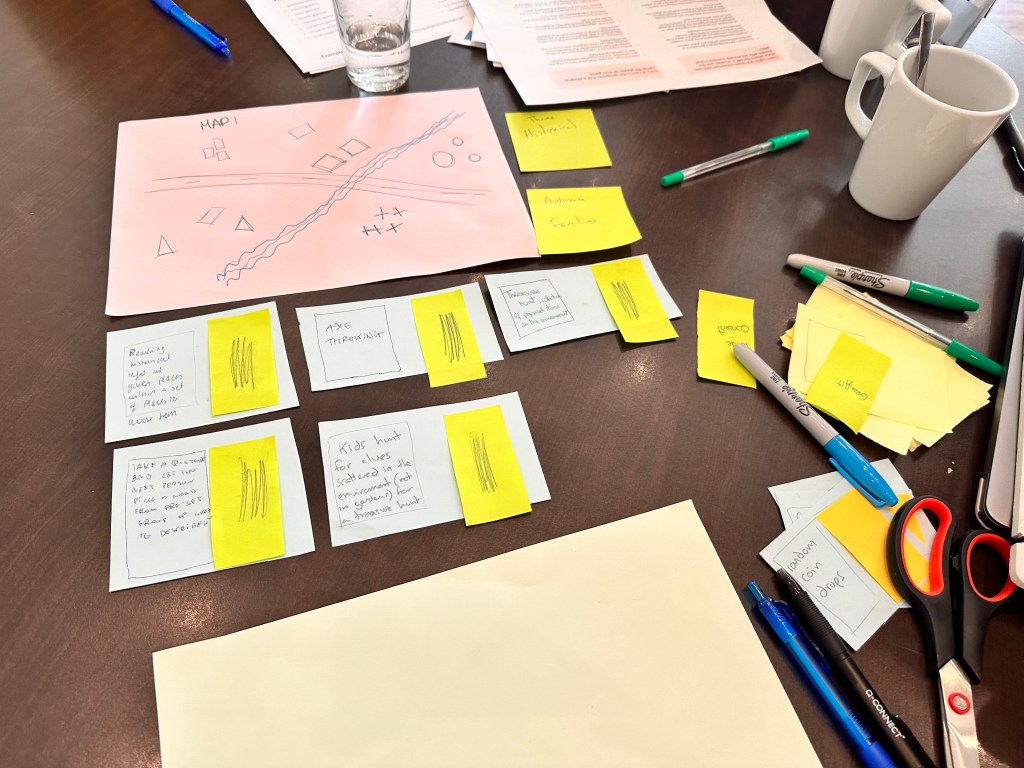
Several of the ideas are worth taking further and we will be looking at developing them into proper tools in the coming year. My group created a game to help people learn about the ethical issues. The idea is that over three rounds all the players suggest features to be added into an MR game, but two of them are actually trying to smuggle ethical problems into the game. Players vote on what gets through, and receive points for correctly identifying ethical issues, and points if their idea gets through (double if its secretly unethical).
My main takeaway from playing the game was that almost everything that you suggest has some ethical issue that might be problematic, so often it is about trying to frame the suggestions to manage the risk rather than avoiding risk altogether.
Its been a great first year, and I’m very much looking forward to working with the wider team over the next two years.
Let’s build some games!
 David Millard
Leave a comment