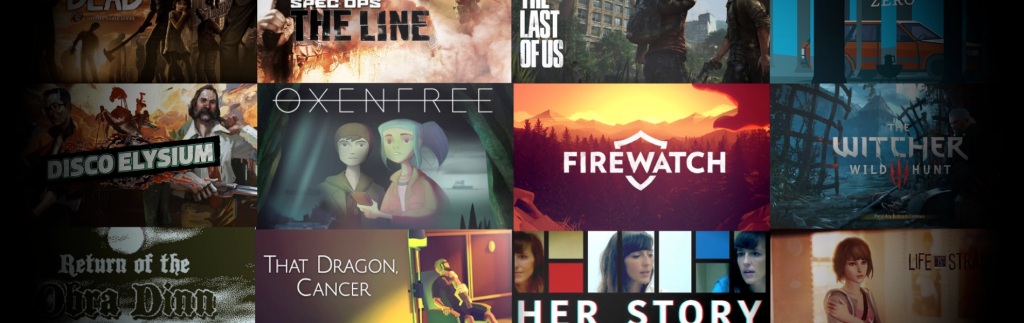
Over the Summer I took part if the ACM Hypertext 2020 conference, hosted in Florida but run online, and gave a presentation to the Blue Skies track on the relationship between Games and Hypertext. It develops some of the ideas that I presented at the Future of Text symposium at the beginning of the year.
My presentation was motivated by the fact that we have multiple communities looking at Interactive Digital Narratives from different perspectives (including Interactive Fiction, Narrative Games, Digital Media, and Literary Hypertext), but these communities don’t seem to talk as much as they should. They have alternative vocabulary for the same phenomena, and don’t really share the same reference works.
I think that these differences are artificial.
By looking at the relationship between Games and Hypertext I instead hope to point out the similarities. You can see a short video version of my presentation below, where I first look at Hypertext through the lens of Games, and second look at Games through the lens of Hypertext:
My conclusion is that literary hypertexts can be seen as a subset of games, with a constrained set of mechanics based around textual lexia and link following (although Strange Hypertexts play with and extend those mechanics). However, it is also clear that narrative games have a core hypertextuality, particularly in how they manage interactive narrative structure, and go beyond paratext to become transmedia.
So Narrative Games are both more and less than Hypertext, with a wider set of mechanics and interfaces, but possessed of a core hypertextuality and situated within a greater hypertext context.
My hope is that by understanding this relationship we can more easily draw on hypertext theory to analyse and understand games, or use games design to influence the next generation of hypertext tools.
The Hypertext and Interactive Digital Narrative communities can sometimes seem small and niche, despite the fact that the most advanced versions of what we discuss dominate the cultural landscape and form an industry worth billions.
If we can unify our perspectives we have much to offer this amazing art form that is destined to dominate the 21st century.

 David Millard
Leave a comment