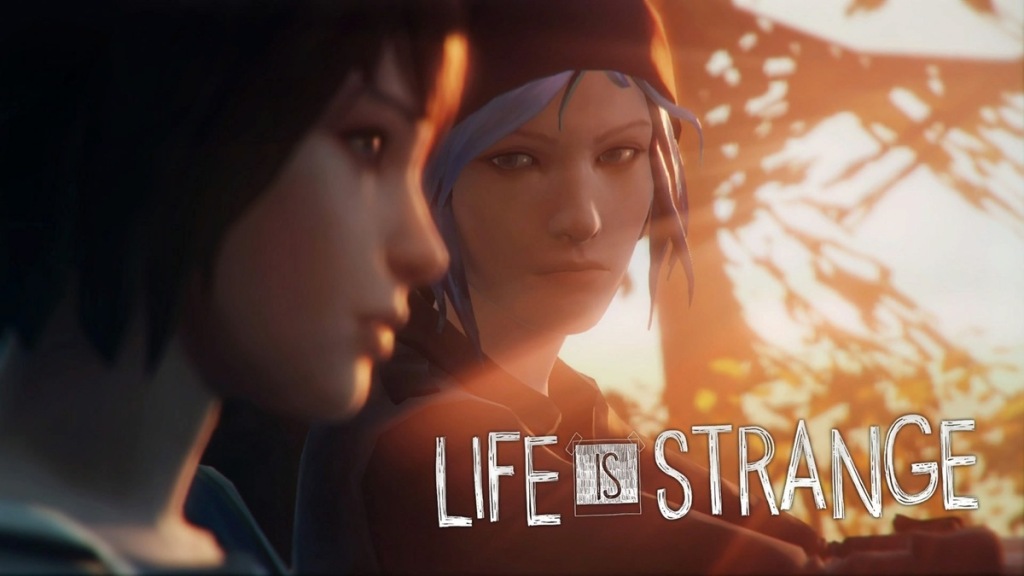
DONTИOD’s Life is Strange, released in 2015, was a surprise indie hit, marrying Telltale style episodic interactive narrative, environmental storytelling, and narrative puzzles, with a nostalgic coming of age tale. It also happened to be a fantastic exploration of teenage relationships, told through the lens of Max and Chloe and their search to find out what happened to Chloe’s missing friend Rachel.
It’s a brave game, touching on domestic violence, drug abuse, bullying, euthanasia, queer romance, and a fair bit of time travel for light relief. The co-creators have done a great director’s commentary explaining their approach to these topics which is well worth a watch. In this post I’ve done my best to avoid direct spoilers but even so, if you’re sensitive to such things then go play the game first. It’s (still) really good.
The recent release of its sequel, with entirely different characters, but the same golden haze art style and acoustic hum, has led me to revisit the first game (and it’s prequel – Before the Storm) and to think about some of the criticisms that the game got the first time around.
One of the best video essays I’ve seen summarizing those criticisms is this one by Innuendo Studios. It’s basically a twenty-five minute confession on why he loves the game despite all the ways it’s weirdly broken. There are some great reflections on what genre DONTNOD were shooting for, but for me it’s the final point that captures what most people complain about, his comment concerning the big decision at the very end and how obviously it’s no decision at all.
In fact Life is Strange is very weird for an interactive narrative game. For a start most of the decisions have very little impact on the grand narrative arc, stuffs gonna happen, and you mostly just get to decide details around the edges (albeit sometimes big details around the edges). Secondly Max’s power is to rewind time. That’s right they made save scumming a core mechanic. So if you were the sort of person who read fighting fantasy books with all five digits stuck in different pages then this is the game for you.
Here then is the crux of the problem. What is the point of making decisions if you can reverse them?
Except there is lots of point. In narrative design 101 we talk about how to make player’s decisions meaningful, both by showing short and long-term consequences, but also by making sure that the player understands what they are doing at the point they make the choice. What better way to understand those implications then by living the consequences.
But surely that means that the interaction is just about finding the best option? That could be a problem, but here it’s not. James Portnow of Extra Credits fame talks about choices vs calculations. Calculations are decisions where there is a best option, what’s the best sword to wield in an RPG, which car is faster for a race, whereas choices have no obvious best path and instead they reflect personal values and moral perspectives. Life is Strange is all about choices, and that’s why it’s okay to explore the options, see the different sides, and then decide. Because ultimately you still do have to decide.
(It’s worth noting that when the game does make it a calculation – such as talking Frank into helping you in episode 4 – it frames the whole conversation as a narrative puzzle, encouraging you to explore different options and to use you ingenuity and memory to find a way through.)
And what about the lack of overall agency, that your decisions are endlessly undone, that ultimately you have very little control? I think it works here because the point of these narrative branches is not the outcome, but how the act of decision changes Max’s character and impacts you as the player. Neither you nor Max forget these alternate realities, and you both have to live with what you chose to do there, and what that says about you, whether you unwind or not.
Which means that the setup for the final momentous decision is a bit different from other games. It’s not really about choosing an ending. The narrative makes sense if it’s the first option, almost everyone will choose the first option, but it still needs to be a choice. Your choice. Because the fact that you made that choice is what gives the scene such great emotional weight.
So really it’s not about choosing an ending, it’s more about fully participating in the ending.
And that bit of design might be the bravest thing of all.
Btw – if you want the counterargument as to which is the ‘right’ ending then this video post by panzerskank is a really thoughtful take:

 David Millard
Leave a comment